
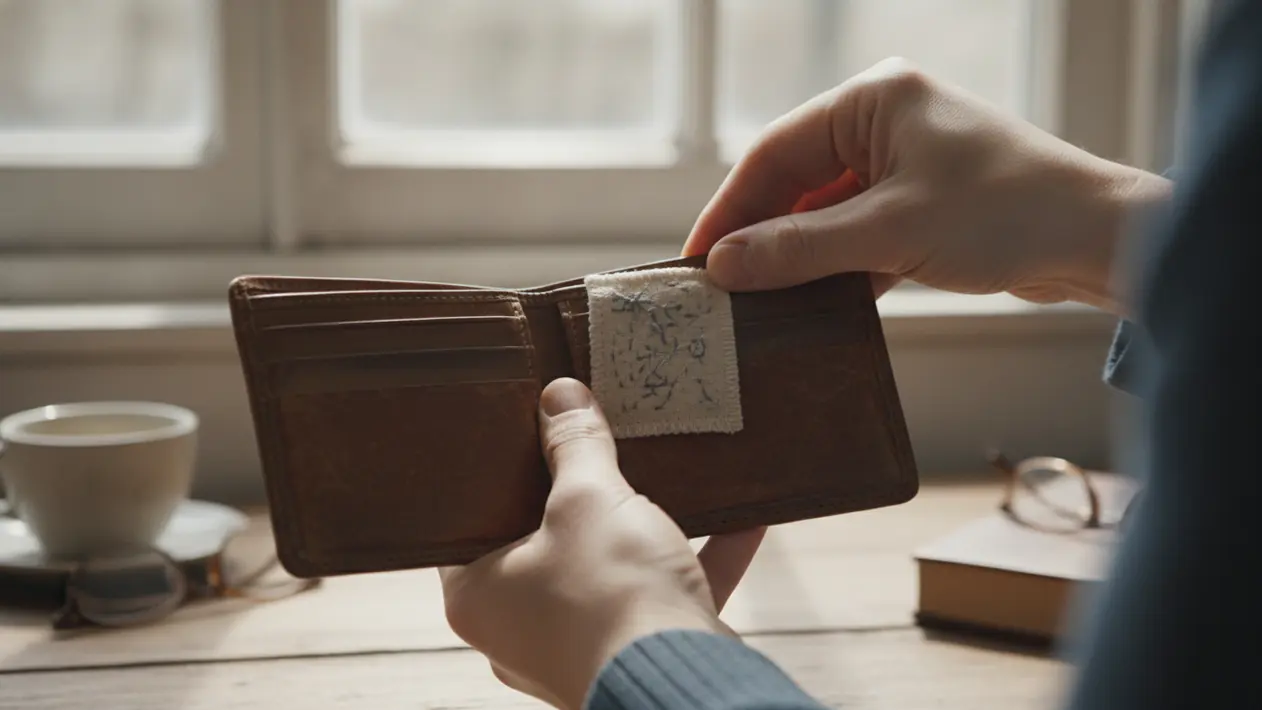
Photos worth taking when the brand is a mystery
Brands hide in small places. The big logo on the front is not always the one that matters, and plenty of objects have no front logo at all. Start with the whole object in even light, then move in close.
Shoot every one of these that exists on your object.
- Printed text, such as a brand name, slogan, model number, serial number, product code, country-of-origin line or website.
- Any logo, with its shape, lettering, colors and trademark markings in the frame.
- Packaging details like the label, cap, box, barcode and warning labels.
- Construction marks, including seams, stitching, screws, fasteners, connectors, vents, buttons and manufacturing stamps.
- Context, such as the store shelf, a vehicle model, appliance controls, a uniform or the accessories around it.
Take the back and the underside too. Serial labels love the underside. Straight-on, well-lit shots of the front, back, underside and each close-up marking give any tool, human or software, the best chance at a useful answer.
Steps to identify a brand from a photo
- Photograph the whole object, then every logo, label, barcode, serial number and the underside.
- Crop the clearest marking so a tool sees the mark and not the background.
- Run that crop through a visual-search tool (see what this tool is and what it does).
- Type out any visible text exactly, keeping odd spelling, punctuation and numbers.
- Search that exact text together with the object type and the country where you found it.
- Compare at least three independent product images or official catalog entries.
- Check dimensions, materials, colorway, model code, packaging and manufacturing date against your candidate.
- Confirm on the manufacturer's own site or a specialist database.
Treat any automated result as a lead, not proof. If the evidence leaves several brands standing, the honest answer is that the brand is still unknown.
What brand is this logo? Compare the details, not the general look
Similar logos cause most wrong guesses. Two marks can both be a blue circle with a white letter and still belong to different companies. Compare the exact letterforms, spacing, colors, orientation and where the trademark symbol sits.
Do not assume the largest logo belongs to the maker. A store brand, a licensee or a product line can be printed bigger than the manufacturer's own mark. If the logo is the whole puzzle, our page on working out what logo you are looking at goes further.
When all you have is a name or model number
People often type what brand is this when all they have is a word stamped on metal or printed on a tag, and if the item is a handset, the unknown phone model page narrows it down. Copy it exactly. Then separate three things that get mixed up constantly.
- A model number identifies a product variant, not necessarily the company.
- The visible brand may differ from the manufacturer, because parent companies and sub-brands share products.
- A retailer, distributor or licensee can sell something under its own name.
Search the exact text with the object category and a suspected country. Then check the result against the object in your hand. If you are trying to name the whole item and not only the maker, identifying an unknown product from a photo covers that side.
Tools that help identify a brand, and where each falls short
No single tool covers everything. Here is what each one does and where it stumbles.
| Tool | Good for | Watch out for |
|---|---|---|
| Google Lens | Visual search for matching images, products, text and related web pages | Capability varies by device, region and date |
| Apple Visual Look Up | Plants, animals, places, art and media, food and symbols, across Photos, Safari and Quick Look on compatible devices | Apple does not guarantee brand recognition |
| Reverse image search services | Finding visually similar or previously published images | Only names the object if a matching image exists |
| Barcode and QR scanners | Manufacturer or product records | Codes can be damaged, reused, region-specific or missing |
| Manufacturer catalogs | Comparing logos, packaging, manuals, model numbers and discontinued products | You need a candidate brand first |
| Retailer and marketplace databases | Matching a product to listings | Listings can carry wrong titles or counterfeit goods |
Apple's developer documentation lists the Visual Look Up categories, which include landmarks, sculptures, paintings, books, album covers, vehicle-dashboard indicators and laundry-care symbols (for those, see our guide to identifying unknown symbols and icons). Brands are not on that list.
Once you have a candidate, official registries for trademarks, vehicles, patents, electrical certification and product recalls can verify specific claims. For odd objects, specialists such as appraisers, mechanics, jewelers, numismatists, antique dealers and repair technicians can name what software cannot.
Bags, shoes, watches and apps have their own clues
Some categories give you extra places to look. On a handbag, hardware, stitching and lining labels matter, and working out which bag you have goes through them. Shoes and watches work the same way, with tongue labels, insoles, caseback engravings and clasps carrying the marks that the front does not.
If the mystery is an app, the interface and icon are your context. Capture the icon with the name under it, then see identifying an unknown app for how to trace it.
Counterfeits, lookalikes and generic products
A confident answer can still be wrong when the object is not what it appears to be. Licensed or counterfeit goods copy real branding, so compare packaging quality, spelling, barcode, serial number and authorized-product listings. A barcode alone is not proof of authenticity.
Lookalike products are close cousins. Compare dimensions, connector layout, label typography, materials and date-specific packaging. Regional packaging and discontinued designs add more confusion, since the version you hold may not match what a current catalog shows.
Some objects simply have no brand. A generic product with no manufacturer mark stays unknown, and that is a legitimate result. Just remember that no search result does not mean no brand. It may mean you searched the wrong crop. For a game box, cartridge or board, identifying an unknown game is the better route.
Why brand guesses so often miss
- Searching a blurry full image instead of cropping the distinctive mark.
- Trusting the first visual-search result.
- Skipping the back, underside, interior or serial label.
- Confusing a retailer, licensee, model or product line with the brand.
- Reporting a confident identification while several lookalikes remain.
- Leaving out the photo's date, the location and the object's dimensions when you ask someone else for help.
Fixing the first one alone solves more cases than you would expect. A tight, sharp crop of one mark beats a wide shot of everything.
What to protect before uploading a brand photo
Strip out anything personal first. Remove faces, addresses, license plates, shipping labels, documents, children and location metadata. Do not send confidential prototypes, workplace materials, medical images, access badges, keys or security equipment to services you do not know.
Policies differ between services. One reverse-image-search service says it keeps logs of uploaded images for 45 days, according to its own privacy page. That is a vendor claim about one vendor, not a rule for all of them, so read the retention terms of whatever you use.
A photo alone is a poor basis for judging poisonous plants, allergens, medicines, electrical parts, weapons, aircraft components, vehicle safety parts or emergencies. For a loose component, identifying an unknown part shows what to measure before you trust a match. For a general way to name any object, try the main photo identifier and verify whatever it says.
Questions about what brand is this
What brand is this picture?
Look inside the picture for any readable text, a logo, a model number, a label or distinctive packaging. Crop the clearest mark and run it through a visual-search tool. If nothing readable shows, a photo alone cannot reliably name the brand, so retake it with close-ups of the back, underside and any serial label.
What brand is this logo?
Compare the exact letterforms, spacing, colors, orientation and trademark placement against official brand pages or catalogs. Similar logos are the biggest source of wrong guesses. Crop the logo tightly, search it, and check at least three independent images before you trust a match. The largest logo on an item may belong to a retailer, not the maker.
How do I find a brand when the item has no logo?
Check for other marks, such as model numbers, serial numbers, product codes, country-of-origin text, barcodes, stitching, screws, connectors and manufacturing stamps. Search any text exactly as printed with the object type. If no manufacturer mark exists, the item may be generic, and unknown is the honest answer.
Can my phone identify a brand from a photo?
Sometimes. Google Lens does visual search for matching images, products and text, though capability varies by device, region and date. Visual Look Up from Apple runs in the Photos app, Safari and Quick Look on supported hardware, yet it only recognizes broad categories such as plants, animals, places, art, food and symbols, and brand recognition is not guaranteed.
What if I cannot find a brand name or model online?
Copy the text exactly, including odd spelling, punctuation and numbers, then search it with the object category and the country where you found it. A model number points to a product variant, not always the company. The visible name may also be a retailer, licensee or sub-brand, so check manufacturer catalogs too.
Is there a way to spot a counterfeit brand item?
Compare packaging quality, spelling, barcode, serial number and authorized-product listings against the real thing. Check dimensions, materials, label typography and colorway as well. A barcode alone does not prove authenticity. Regional packaging and discontinued designs can also look odd, so confirm with the manufacturer or a specialist before deciding.
What brand is this name?
When all you have is a word stamped on metal or printed on a tag, copy it exactly, keeping odd spelling, punctuation and numbers. Remember that a model number identifies a variant, not necessarily the company, and that parent companies, sub-brands, retailers, distributors and licensees can all sell products under their own names. Search the exact text with the object category and a suspected country, then check the result against the object in your hand.
Why is the biggest logo not always the brand?
The largest logo is not always the maker's mark. A store brand, a licensee or a product line can be printed bigger than the manufacturer's own logo. The visible brand may also differ from the manufacturer, because parent companies and sub-brands share products, and a retailer or distributor can sell an item under its own name. Check the model number, labels and the manufacturer's own site before deciding.