
How far a picture gets you on price
A photo is a starting point. It can point to a probable identification, and that identification lets you build a price range. It cannot give you an exact sale price, because value depends on things a camera misses, such as provenance, repairs, and what buyers in your market paid last month.
Four things turn a guess into a number you can defend. The model or maker. The condition. The item's history. Recent sold comparables. When one is missing, the honest answer is a wider range, or unknown. That is useful too, because it tells you which clue to chase next.
So what is this worth, really? Three smaller questions, in order. What is it? Is it the genuine, complete version? What did the same thing sell for recently? The rest of this page follows that order.
Before valuing anything, take these photos
Bad photos produce bad matches. Shoot in bright, diffuse light, like a window on an overcast day, so marks do not disappear in glare. Then collect these.
- The whole object from the front, back, sides and underside, plus the interior if it opens.
- Every mark, in close-up. Maker's marks, logos, labels, signatures, hallmarks, serial numbers, model numbers, patent numbers, barcodes and date codes all count.
- Damage. Cracks, chips, repairs, corrosion, stains, wear, missing parts, and anything that looks restored or altered.
- Scale. Lay a tape measure along it, and note height, width, depth, weight and material if you know them.
- Packaging, manuals, receipts, certificates, tags and original accessories.
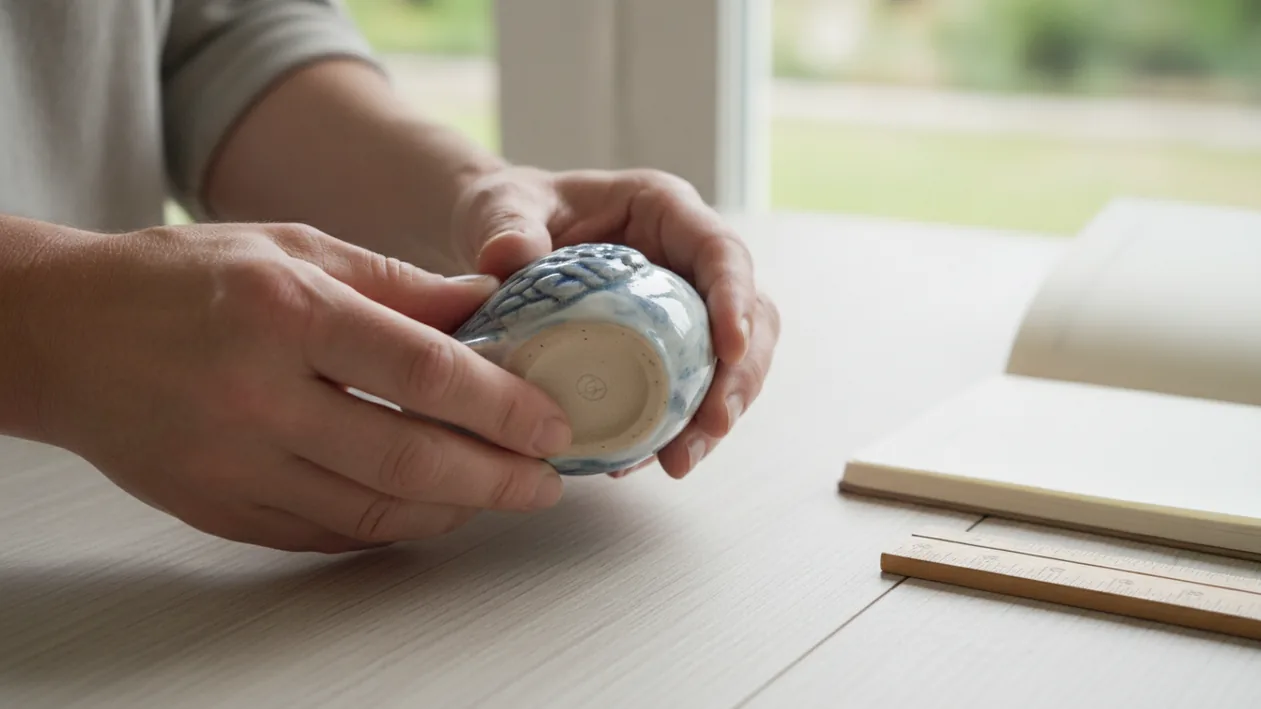
The underside is the shot people skip, and it is often where the mark lives. One blurry image from the front is the most common reason a search goes nowhere.
How to get from a photo to a price range, step by step
- Photograph everything. Use the shot list above, marks and damage included.
- Get candidate names. Search the item with Google Lens or Bing, or drop the photo into our upload box for a probable name and a certainty rating. Either way, treat the result as a suggestion, not a verdict.
- Search the specifics together. Combine the exact maker, model, dimensions and one distinguishing feature. A vague description returns vague results. If you cannot name the thing, start with finding the right name for it, and if a logo has you stuck, work out the brand first.
- Confirm the exact model. Similar-looking items are everywhere, and for a handset, working out exactly which phone you have comes first. Compare model numbers, ports, dimensions, controls, trim and release dates.
- Find at least three sold sales. Completed transactions only, not active listings.
- Sort them. Separate prices by condition, completeness, location, currency and sale date.
- Subtract the costs. Seller fees, shipping, taxes, authentication costs and auction commissions all come out of what you would actually keep.
- Get a second opinion on big numbers. Authentication or a specialist appraisal comes before you rely on a high-value result.
- Write down a range. Record the date, source, condition, fees and currency, and add your confidence. If key evidence is missing, write unknown.
Sold prices versus asking prices
An asking price is a hope. A sold price is a fact. Anyone can list a chipped vase for a huge number, and it proves nothing until someone pays it. Where a marketplace lets you filter to completed or sold listings, use that filter and ignore the rest.
Then check that your comparison is a true match. An exact model in good shape with its box is not a comp for yours if yours has a crack and a missing lid. Missing components can change the price substantially, so list every accessory you have. A loose piece of something bigger is its own question, and identifying an unknown part is the place to start.
Currency and market matter as well. A price from one country cannot sit beside a price from another without conversion and adjustment. No universal range exists for any item. The value depends on the item, its condition, the market, the currency and the date, which is why a single number from a stranger online deserves suspicion.
Tools that help you value an item, and what each one does
No single tool does the whole job. Most identify, a few show comparables, and humans handle attribution. Here is the lineup, going by what each one says about itself.
| Tool | What it does | Best for |
|---|---|---|
| Google Lens | Free visual search on the web and through iOS and Android. Identifies objects, text and landmarks and finds similar images and web results. | First-pass identification |
| Amazon Camera Search | Finds products from an image. | Retail goods |
| eBay Visual Search | Finds similar eBay listings that may serve as resale comparables. | Resale comps, once you filter to sold items |
| Auction databases and catalogues | Show historical sold prices, maker attribution and collectible comparables. Access depends on the category. | Collectibles and antiques |
| Appraizely | States that its photo-based estimates use results from Sotheby's, Christie's and more than 500 auction houses. | Quick estimates for art and antiques |
| ValueMyStuff | States it has more than 60 experts across more than 50 categories. | Human appraisal |
Photo-based apps may return an identification, comparable listings and a value range. Their descriptions do not give accuracy rates, so read the range as a starting point. Features, prices and databases change, so check each tool on the day you use it. For everyday things outside of valuables, the same habit of naming something from a clear photo applies.
Original, reproduction or counterfeit, and why it changes the price
Two objects can look alike and be worth very different amounts. Three confusions cause most bad estimates.
Original versus reproduction. Compare construction, aging, labels, marks, materials and manufacturing methods. A modern reproduction priced as an antique is a classic mistake. Age cannot be reliably read from appearance alone, so maker's marks and documented provenance carry the weight.
Genuine versus counterfeit. Check spelling, logo proportions, stitching, serial-number format, hardware, packaging and provenance. For valuable goods, authentication is required before any price means much. Handbags and watches are the usual cases, and identifying the exact watch or pinning down the bag model gives you a reference to check against, while our guide to identifying unknown shoes helps with sneakers and designer footwear.
One model among many in a line. Products in the same line share a look. Model numbers, ports, dimensions, controls, trim and release dates tell them apart, and the right one is the only valid comparison.
When to pay for an appraisal instead of searching yourself
If your answer to what is this worth comes out high, stop searching and ask a human. Specialist appraisers assess attribution, condition, authenticity, fair-market value and insurance value. ValueMyStuff says it can provide attribution, an auction-catalogue description, fair-market value and insurance value. Auction houses suit high-value art, antiques, jewelry and collectibles.
Local specialists are often better than any general image tool for specialist items. Think jewelers, watchmakers, numismatists, booksellers, mechanics, taxidermists, botanists and museum staff. Manufacturer or brand support can confirm a model number, replacement parts, recalls, manuals and production information.
An AI result is not proof of authenticity, ownership, provenance, insurance value, tax value or export eligibility. Those need a person and paperwork.
Mistakes that throw off a photo-based estimate
- Trusting the first visual match. It may be similar, not exact.
- Using one blurry image, or leaving out the underside, interior, label and serial number.
- Cropping out the scale.
- Reading an asking price as a sale price.
- Ignoring condition, missing parts, repairs and restoration.
- Believing an age, origin or price from an AI tool without primary evidence.
- Comparing across currencies or markets without adjusting.
- Forgetting seller fees, shipping, taxes, authentication costs and auction commissions.
- Claiming certainty when the maker, model, provenance or sales evidence is missing.
Privacy and safety when you photograph your belongings
Before you post a photo asking for help, check what it shows. Do not publish readable addresses, faces, license plates, identity documents, serial numbers, access codes or private correspondence. Strip metadata such as GPS location before sharing when location privacy matters.
Review camera, photo-library, location and cloud-upload permissions before you use any app. Google Lens needs camera or photo access, and what that means for your data depends on your settings and your own definition of privacy. Check app terms before uploading proprietary designs or confidential documents, and ask permission before photographing someone else's belongings or private property.
Some things should not be handled just to get a clean photo. That includes suspected asbestos, unexploded ordnance, hazardous chemicals, unknown powders, live electrical equipment and firearms. Leave protected wildlife, archaeological sites, fossils, graves and culturally sensitive objects alone too. Local laws vary, and the legal status depends on where you are.
Questions about what is this worth
How much is this worth app free?
Lens costs nothing on the web and in Google's iOS and Android products. It identifies objects, text and landmarks and surfaces similar images and web results, so you still do the price research yourself. Amazon Camera Search and eBay Visual Search also work from an image and lean toward retail goods and eBay listings. Features, prices and availability change, so check each one on the day you use it.
How can I check if something is valuable?
Look for marks first, such as maker's marks, signatures, hallmarks and serial numbers, then note the condition and whether parts are missing. Search the exact maker and model together and find at least three sold transactions, not active listings. If the numbers look high, get authentication or a specialist appraisal before you rely on them.
How do I tell if my antiques are valuable?
Age cannot be reliably judged from appearance alone, so look to maker's marks and documented provenance. Compare construction, aging, labels, marks and materials against known originals to rule out a modern reproduction. Check for cracks, repairs and restoration, because those change price. For anything that could be high value, an auction house or specialist appraiser should confirm authenticity.
How do I turn a photo into a price range?
Start by photographing the whole object, every mark, any damage, and something for scale. Use visual search for a shortlist of names, then pin down the exact model before you look at prices. Find at least three sold sales, not active listings, and sort them by condition, completeness, location, currency and date. Subtract fees and shipping, then write down a range. If key evidence is missing, write unknown.
Can a picture of something tell me what it is worth?
Partly. Photo-based tools may return an identification, comparable listings and a value range. A photo alone usually cannot settle an exact identity or sale price, and the app descriptions do not publish accuracy rates. Use the result as a probable identification, then check it against sold prices and, for valuable items, an expert.
What knick knacks are worth money?
No universal list exists, because value depends on the maker, condition, completeness, market and date. Turn each piece over and look for marks, labels, signatures and hallmarks. Chips, cracks, repairs and missing parts change the price, and so can original packaging. Search the maker and model and check sold prices before you decide to keep or sell anything.
What is the difference between sold and asking price?
An asking price is a hope, while a sold price is a fact. Anyone can list a chipped vase for a huge number, and it proves nothing until someone pays it. Use marketplace filters for completed or sold listings and ignore the rest. Then confirm your comparison is a true match in model, condition and completeness, and find at least three sold sales.