
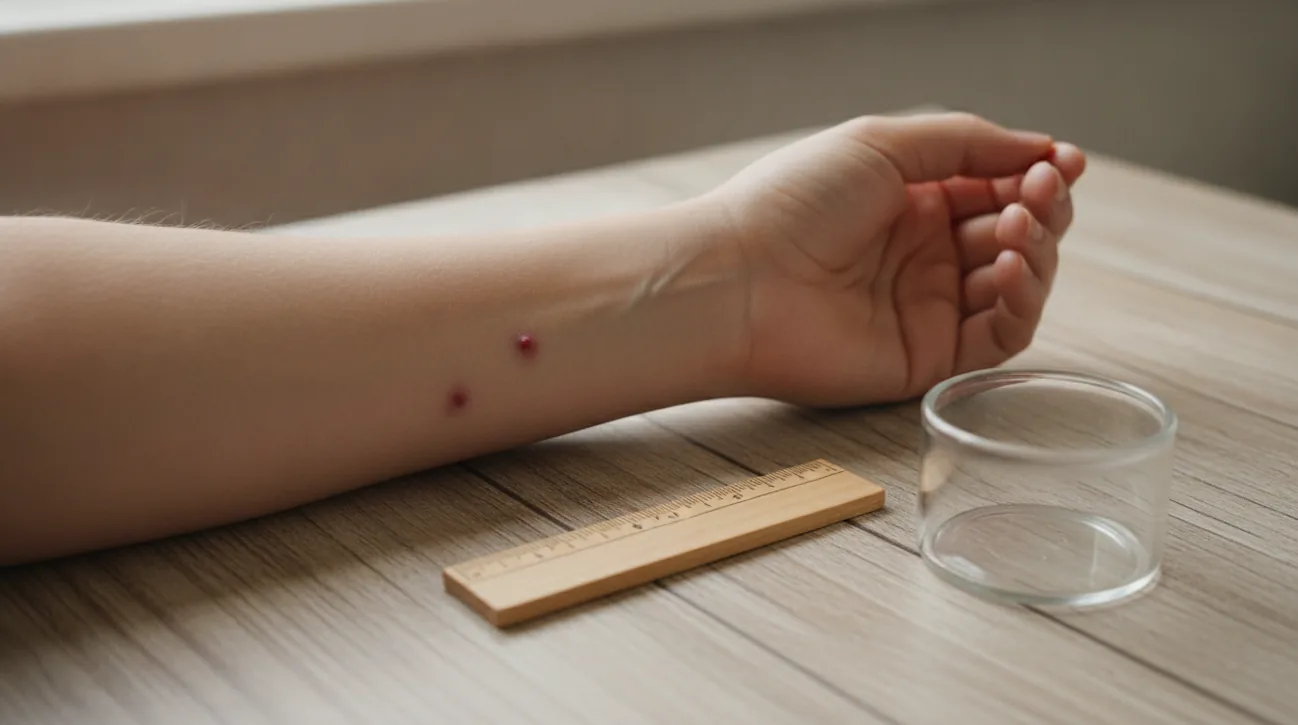
A photo of the bite alone rarely gives the answer
Bite appearance overlaps among mosquitoes, bed bugs, fleas, chiggers, ticks, spiders, hives, eczema and fungal rashes. Red, itchy bumps are just red, itchy bumps. The EPA says bed-bug bites are a poor sign of an infestation because they can look like other bites, rashes or hives, and some people have no reaction at all. So a neat row of bumps does not prove bed bugs, and a clean arm does not prove you are in the clear.
Spiders are the classic trap. Many bites blamed on spiders turn out to be other conditions, and a photo of a lesion cannot confirm a spider did it. If nobody saw the spider, the honest label is "unknown bite".
The most reliable route is a photograph of the actual arthropod or physical evidence, combined with location, timing, exposure and symptoms. That is what the rest of this page is built around.
Extra photos to take alongside the bite
Think like a detective, not a dermatologist. The skin is one clue out of several.
- The bug itself. Body shape, number of legs, wings, antennae, color and segmentation matter more than anything on your skin.
- The pattern. Note whether bites are isolated or clustered, in a line, on one side of the body or widespread, and where they sit.
- The timing. Immediate pain, delayed itching, bites that show up overnight and symptoms after time outdoors point in different directions.
- Nearby evidence. Shed skins, eggs, fecal spots, blood stains and nest material count.
- The reaction. Itching, pain, swelling, blisters, a central puncture, spreading redness and a target-like rash are all worth recording.
- Scale. Put a ruler next to the bug or the mark. A coin helps, but do not make it your only size reference.
Take one wide shot and a few close-ups, in good light, without flash glare or heavy filters. If you catch the bug, upload a sharp photo of it to the scanner above. The AI describes the marks it sees and says its certainty, so read the result as a lead for a doctor or pharmacist to confirm.
Bite look-alikes and the differences that separate them
Use this table to narrow the field. Every row has a limit, and that is the point.
| Possible cause | What may help distinguish it | Limit |
|---|---|---|
| Bed bugs | Adults are reddish-brown, oval, flattened, wingless and six-legged, about 5 to 7 mm long. Eggs are tiny, white and stuck to surfaces. | Bite marks alone are unreliable. |
| Mosquitoes | Itchy raised welts, often on exposed skin. The insect is slender with long legs and one pair of wings. | A bite photo normally cannot confirm the species. |
| Fleas | Small itchy bumps, often around the ankles or lower legs. Check pets and bedding for fleas or flea dirt, and if you are unsure what kind of animal you are dealing with, our tool for working out a dog's breed can help, while our guide to identifying your cat's type covers cats. | The skin pattern is not definitive. |
| Ticks | The tick may still be attached. Photograph it before removal if you can. | A rash may be absent or delayed, and a photo cannot show whether infection occurred. |
| Chiggers | Very itchy small bumps after grass, brush or outdoor time, commonly near tight clothing. | Often confused with other bites and dermatitis. |
| Spiders | Usually presumed without seeing a spider. | A photo cannot verify a spider cause. |
| Hives, eczema, fungal infection | Hives can move or appear in several places. Fungal patches may expand with a scaly border, and when the culprit is a fungus growing outdoors, the mushroom photo page is worth a look. | A medical exam may be needed. |
Notice how often the answer in the middle column is a thing you can look at, not a bump you can squint at. That is why the insect photo beats the skin photo every time.
What a bed bug looks like and where to find one
Bed bugs are the usual suspect for nighttime bites, so they deserve a closer look. The EPA describes adults as brown to reddish, oval, flattened, wingless and six-legged, roughly 5 to 7 mm, or 3/16 to 1/4 inch, long. Nymphs are light-colored and about 1/16 inch in the EPA identification card. Eggs are tiny, white and glued to surfaces.
Adults are about as wide as a credit card, according to the EPA, so they squeeze into very small gaps. Look at mattress seams, box springs, bed frames, cracks and nearby furniture. You are searching for live insects, eggs, shed skins, fecal spots and blood stains.
Bites are often painless at first and commonly happen at night, which is why people wake up with marks and no culprit. The EPA, CDC and USDA classify bed bugs as a public-health pest, so a confirmed find is worth acting on. It is just not something to decide from rash photos.
Working out what bit you, step by step
- Check for emergencies first. The warning signs are listed in the next section.
- Photograph the skin. Take an overall image and close-ups with a ruler for scale.
- Photograph the suspected source. That could be the insect, bedding, clothing, a pet, a room, a plant or the outdoor spot, and if a tree was overhead, naming that tree from a photo is worth a minute.
- Keep the evidence. Do not crush or throw away a suspected insect. Seal it in a container or clear tape if that is safe.
- Write down the context. Note date, time, place, indoor or outdoor exposure, sleeping arrangements, pets, travel, new products and when symptoms began.
- Inspect likely hiding places. For suspected bed bugs, go through the seams and frames mentioned above.
- Compare with a reliable reference. Match size, body structure and physical evidence, not the rash.
- Use an app only as a first comparison. Do not spray pesticides or take medication just because an app returned a match.
- Escalate if it stays unclear. Details are in the sections below.
- Keep watching. Photograph the same area over days and note whether new marks appear.
Warning signs and when to get help
A photo is never enough to decide how to treat a bite. Seek urgent medical help for trouble breathing, swelling of the face or throat, fainting, widespread hives that develop quickly, severe pain or an illness that is getting worse fast.
For anything less dramatic, contact a clinician if the bite persists, looks infected, keeps spreading or comes with whole-body symptoms like fever. Dermatologists and clinicians are the ones who can evaluate rashes, allergic reactions, infection and possible tick-related illness. A tick photo can support identification, but it cannot tell you whether disease was passed on.
If you suspect an infestation, a licensed pest-management professional can inspect rooms, collect specimens and recommend treatment. University extension services and entomology departments may also identify insects from submitted photos or specimens, so ask your local one how it works.
What apps and reverse image search can and cannot do
Some commercial apps compare insect or bite photos against a database and offer likely matches plus basic first-aid tips. Accuracy, pricing and data handling differ from app to app. Treat any result as a hypothesis, never a diagnosis, and do not treat the top match as settled.
Reverse-image search can find look-alike pictures, but it cannot show that the bug in your photo caused the bite on your skin. If what you found is something bigger than an insect, the photo guide for identifying an animal may fit better, and for bites after swimming or wading, the fish page may help. Stuck on naming something else? The homepage has a simple photo route for any unknown object. For a part or gadget around the house, learning what an object is called follows the same steps: clear photo, good angle, then check the answer.
Evidence, privacy and pesticide rules that are easy to miss
Do not use pesticides on skin, pets, bedding or indoors unless the product label expressly allows that use. Spraying also destroys the evidence you may need. Labels often carry warning symbols, and if one is unfamiliar you can identify a warning symbol from a photo before you open the bottle. Found a spray, trap or powder you do not remember buying? You can also name an unfamiliar product from a photo, then read its label.
If a landlord, hotel, insurer or public-health investigation could get involved, save the suspected evidence before any cleaning or extermination. Rules on pest treatment, landlord duties, medical privacy and specimen collection differ by location, so check the ones where you live.
When you upload photos anywhere, avoid showing faces, children, addresses, medical records or geolocation unless you truly need to. App privacy policies change, so read the current one before sending medical or household images. Check whether images are uploaded, kept, used for model training or tied to an account.
Reasons a bite gets the wrong label
The same errors keep showing up.
- Naming the insect from the rash alone, or assuming a line or cluster proves bed bugs.
- Calling a mark a spider bite when no spider was seen.
- Mixing up a tick, flea or mite with a skin lesion.
- Leaving out scale, location, date or a second angle.
- Posting blurry, filtered or flash-glared photos.
- Searching by color instead of body structure and leg count.
- Ignoring non-insect causes such as hives, eczema, infection or a medication reaction.
Fix those and your next "what is this bite" search will go from guesswork to a short list you can actually check.
Questions about identify bug bites by picture
What does a bite from a bug look like?
Most bug bites show up as small, itchy, red or raised bumps, sometimes with a central puncture, blistering or swelling. The trouble is that mosquitoes, fleas, chiggers, bed bugs and even hives or eczema can look the same. Pattern, body location and timing help a little, but the insect or evidence nearby tells you far more than the mark.
What is commonly mistaken for bed bug bites?
Mosquito bites, flea bites, chigger bites, hives, eczema and fungal rashes are the usual look-alikes. The EPA notes that bed-bug bites can resemble other bites, rashes or hives, and some people do not react to them at all. Because of that, finding the bug, eggs, shed skins, fecal spots or blood stains is a better test than the bumps.
What should I photograph besides the bite to figure out what bit me?
Photograph the bug itself first, since body shape, leg count, wings, antennae and color matter more than the skin. Also record the bite pattern (isolated, clustered or in a line), the timing, nearby evidence such as shed skins, eggs, fecal spots or blood stains, and the reaction. Put a ruler beside the bug or mark for scale, and take one wide shot plus close-ups in good light without flash glare.
How do you know if you have a poisonous bite?
A photo cannot tell you. Get urgent medical help for trouble breathing, swelling of the face or throat, fainting, widespread hives that develop quickly, severe pain or fast-worsening illness. Do not label a mark as a spider bite unless you saw the spider, and remember that a tick photo cannot show whether an infection was passed on.
What is biting me at night if it is not bed bugs?
Mosquitoes, fleas and other insects are common candidates, and not every itchy mark is a bite. Fleas tend to bite around the ankles and lower legs, and pets and bedding may carry flea dirt. Hives, eczema or a reaction to a new product can also mimic bites. Look for the actual insect, and check bedding and sleeping areas for evidence.
How do I identify what has bitten me?
Photograph the skin with a ruler, then hunt for the source, such as the insect, bedding, a pet or an outdoor spot. Record the date, time, place, pets, travel and when symptoms began. Keep any suspected insect in a sealed container. If the cause stays unclear or symptoms linger, ask a clinician or a licensed pest professional.
Can a photo show whether a tick bite is infected?
No. A tick photo can help identify the tick, ideally taken before removal, but it cannot show whether disease transmission occurred. A rash may be absent or arrive late. If you were bitten by a tick, or you develop spreading redness, a target-like rash or whole-body symptoms, contact a clinician.
Should I keep the bug that I think bit me?
Yes, if you can do it safely. Do not crush it or throw it away. Put it in a sealed container or stick it to clear tape, and photograph it next to a ruler. A pest professional, extension service or entomology department may be able to identify it, and the evidence also matters if a landlord or hotel is involved.