
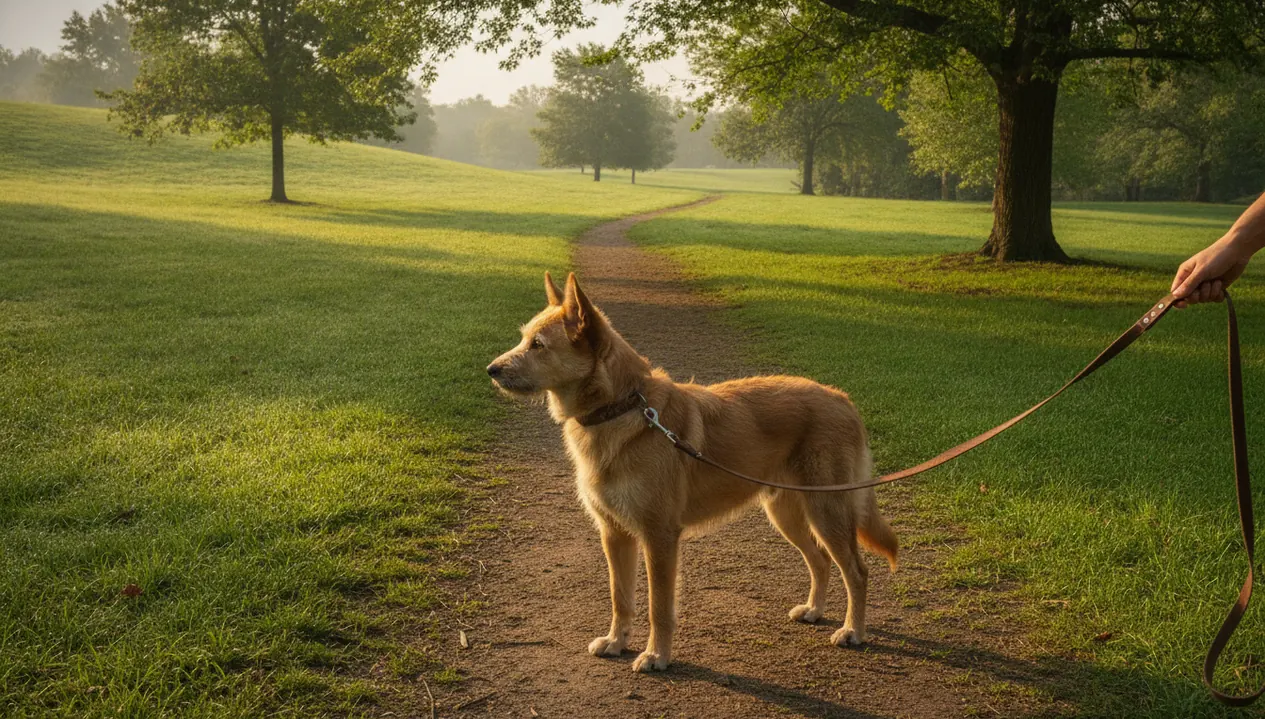
Why looks alone rarely settle a dog's breed
A photo shows appearance. Breed is about ancestry. In a registered purebred with a clear standard, the two line up well. In a mixed dog, they often do not. A mixed dog can show traits from several breeds at once, so a single visual match can mislead you.
Coat color, ear shape and head size can steer a visual guess. According to LegalClarity's review of canine DNA testing, though, those cues do not reliably prove genetic heritage. So when you ask what breed of dog is this, the honest output of a photo is a likely appearance type, such as "Labrador type" or "possible shepherd mix."
Sometimes the right answer is "unknown." A mixed-breed dog, a low-quality image, unusual grooming, a puppy coat or crossbreed ancestry can all push a photo-only answer there. That is a fine result. It beats a confident wrong one.
How to identify a dog breed from a photo, step by step
Good input matters more than which tool you pick. Work through these in order.
- Shoot in good daylight without filters. Filters change coat color and texture, and both are clues.
- Take a full side view first, with the dog standing. Then add a front view, a rear view and a head close-up.
- Include an object of known size, or write down height at the withers, body length and weight. A photo has no built-in scale, so size stays a guess without a measurement.
- Record age, sex, location, known parents, shelter information and grooming history. A puppy, a shaved coat or cropped ears hide traits a tool would otherwise use.
- Note what you can see yourself. Ears, muzzle, coat, markings, tail, legs, feet and body proportions. The next section covers what each one tells you.
- Run the clearest images through at least two tools. The scanner above is one option. The AI looks at the dog in your photo and offers a likely breed or mix with its level of certainty, a hint rather than a verdict.
- Compare the suggested breeds with official breed-standard descriptions. Reference photographs and written descriptions are your check on any tool.
- Cross off any candidate that conflicts with a major structural trait, such as leg length, chest depth or tail shape.
- Label the result "likely," "possible mix" or "unknown." Do not call it confirmed.
- For anything important, verify with pedigree records or DNA testing.
- Ask a veterinarian about health or behavior concerns, including identifying a bug bite from a picture on your dog's skin. Breed identification is not a substitute for a medical assessment.
Dog features that matter most when you identify a breed
Look at the whole dog before you look at the face. Faces are what people love and also what fools them. These are the features worth checking, and each one narrows the field a little.
- Body proportion. Height compared with length, chest depth, bone thickness and leg length. A long, low dog and a leggy dog are different builds whatever the coat looks like.
- Head. Skull width, the stop between forehead and muzzle, muzzle length and jaw shape.
- Ears. Erect, folded, drop, rose, button, triangular or feathered, plus where they sit on the skull.
- Eyes. Shape, spacing and typical color. Eye color alone is not diagnostic.
- Coat. Short, wire, curly, long, double-coated, hairless, feathered or corded.
- Coat pattern. Solid, brindle, merle, sable, parti-color, tan-point or spotted.
- Tail. Length, carriage, curl, feathering, and whether it is naturally short.
- Feet and legs. Webbing, pastern angle, paw size and leg furnishings.
- Movement. Gait can separate some working, herding, sighthound and terrier types. A short video clip shows what a still photo cannot.
Color is the weakest clue on the list. Different breeds share the same colors, and one breed comes in many. Weight structure over color every time.
Look-alike dog breeds and what to compare
Some pairs fool people constantly. This table lists what to check for each one.
| Pair that gets confused | What to compare |
|---|---|
| Labrador Retriever and a mixed retriever | Entire body, tail shape, coat density, head proportions, documented ancestry |
| Golden Retriever and a yellow retriever mix | Feathering, skull and muzzle proportions, body structure, coat texture |
| German Shepherd and Belgian Malinois | Coat pattern, body build, ear shape, muzzle, working-dog proportions |
| Husky and Alaskan Malamute | Overall size, bone, head proportions, ear placement, tail carriage, eye appearance |
| Border Collie and Australian Shepherd | Body proportions, coat pattern, ear carriage, tail, movement |
| Poodle and a doodle cross | Coat type, furnishings, body structure, documented parentage |
| Short-haired hound breeds | Ear length, chest depth, muzzle, body length and tail carriage, rather than color alone |
Documented ancestry shows up more than once in that table. When two dogs look alike, paperwork is the tiebreaker, not a closer stare at the photo.
Pit bull types cannot be sorted from a photo
American Pit Bull Terriers, American Staffordshire Terriers and similar mixes are the hardest case. Overlapping ancestry and breeding produce similar appearances, so visual separation is unreliable. A photo cannot confirm the breed.
This matters beyond trivia. Breed labels can affect housing, insurance, shelter decisions and how people see a dog. In NPR's 2019 reporting, DNA-test experts warned that genetic data and breed results may be used in discriminatory ways. Do not decide a dog is dangerous from a breed guess, and do not use a breed guess to predict aggression, health or temperament.
Mixed breeds, puppies and doodles
A mixed dog is a puzzle with pieces from several boxes. Ears from one place, a tail from another, a coat that matches neither. Naming the most visible breed feels satisfying and is often wrong.
Puppies add a second problem. A puppy coat and puppy proportions do not match the adult, so naming a puppy by its adult breed type is a common error. Grooming adds a third. Shaved coats, cropped ears, and dyed or dirty coats can hide the very traits you need.
Doodles deserve their own note. Telling a Poodle from a doodle cross comes down to coat type, furnishings, body structure and documented parentage. The coat alone rarely settles it.
A shelter label is not genetic proof either. Shelters and breed-rescue specialists can offer experienced visual assessments, but those assessments remain uncertain. If someone gives you a precise percentage mix, ask what evidence sits behind it. A photo supports "possible mix" at most.
Reading a breed result without trusting it too much
Commercial photo tools commonly return one or more likely breeds, and sometimes a confidence score. Think of that as a shortlist, not a ranking of truth. If the top three breeds look nothing alike, that tells you something. The dog probably has no clear match, so "possible mix" or "unknown" is the better label.
If two tools agree and the dog's structure fits the breed standard, "likely" is fair. If they disagree, trust the breed standard over either tool. Exact size, weight and age stay unknown until someone measures and weighs the dog, so do not let a tool settle questions a tape measure and a scale should settle.
Dog breed identifier apps, Google Lens and other ways to check
Photo-identification apps analyze a photo or video and suggest likely breeds. Some add mixed-breed estimates and confidence scores. Reviews from Lilach Bullock and The AI Future describe them this way, and they are a reasonable first step when you want a shortlist fast.
Database size is a common selling point. A 2026 Google Play listing for one dog-identification app describes more than 500 breeds. A 2026 comparison on The AI Future describes another app with more than 370. Those are database totals, not proof that every breed is officially recognized. The number of recognized breeds depends on the organization and the year, so no single count is universal.
Google Lens is a general visual search. It can surface candidate breed pages or visually similar images. A search match is not a genetic diagnosis, so treat the pages it finds as leads to check against breed standards. Photo identifiers can be free, subscription-based or paid, and prices vary by app, country, platform and date. Check the current listing before you pay for anything.
People and records that can confirm a dog's breed
- Breed databases and standards. They give reference photographs, physical descriptions, histories and accepted characteristics.
- Pedigree registries. They can confirm a registered purebred when the registration and identity records are genuine. They cannot establish the ancestry of an unidentified dog.
- Veterinarians. They can assess health, age, body condition and physical traits, but may not be able to confirm breed from appearance.
- Breed judges and knowledgeable breeders. They can compare a dog with a formal breed standard, especially when the dog is mature and unaltered.
The same photo habits work beyond dogs, and if you ever find an odd growth in the yard, our guide to identifying a mushroom uses them too, while anyone who catches an unfamiliar catch at the lake can try our guide to identifying a fish. If the picture shows another creature, try the unknown animal page. For a whiskered pet there is the cat type page, and a tree in the background of your shot can be named through the tree identification page. Gear is a separate question. For a collar buckle or tag you cannot name, see naming an unknown object from a photo. And for finding out what any other everyday thing is, the main page for identifying things from photos is the place to start.
What dog DNA tests can confirm and where they fall short
A DNA test compares your dog's genetic markers with a company's breed reference dataset. That sounds final, but results differ between companies. NPR reported in 2019 that Wisdom Panel tested for more than 350 breeds and more than 20 genetic traits. The same report noted that direct-to-consumer dog DNA testing has no universally accepted industry standard for breed or health-status testing.
Accuracy numbers need context. One company cited 93% accuracy for mixed-breed identification in its own internal study. That is one company's figure, not an industry-wide rate. A 2024 peer-reviewed comparison in the Journal of the American Veterinary Medical Association found that consumer tests did not identify every registered dog as 100% of its registered breed ancestry, and results varied substantially between vendors.
Two practical points follow. Companies update their reference populations and products, so claims and databases change over time. And providers may retain or share genetic data under their terms, with raw-data access depending on the provider and the agreement. Read the terms first, and check the provider's current product page for price.
Where breed answers go wrong
When someone types what breed of dog is this and gets a confident wrong answer, it usually traces back to one of these.
- Treating the top app result as confirmed.
- Going by coat color alone.
- Ignoring body proportions and tail structure.
- Comparing only the face.
- Confusing a crossbreed with a purebred.
- Using a blurry, filtered, posed or heavily groomed image.
- Reading a puppy as its adult breed type.
- Assuming a shelter label is genetic proof.
- Treating one DNA company's result as definitive.
- Reporting a precise percentage mix when the evidence supports only "possible mix" or "unknown."
- Forgetting that app databases and test accuracy claims change over time.
Privacy, safety and legal points before you photograph a dog
Get permission before photographing an owned or identifiable dog. Do not approach, restrain, feed or photograph an unfamiliar dog at close range without the owner's permission.
Review an app's privacy policy before uploading photographs, location data, facial images of people or identifying information. Do not upload another person's dog photographs or personal information without their permission.
Local rules on photographing, recording, importing, owning or restricting dogs vary by jurisdiction. Do not rely on an app or DNA result for legal compliance, insurance declarations, housing applications, animal-control classification or medical decisions. For those, you need records and a professional.
Questions about what breed of dog is this
How do I know what kind of dog my dog is?
Start with clear photos of the whole dog from the side, plus close-ups of the head, ears, muzzle, coat, tail, legs and paws. Run them through more than one photo identifier, then compare the suggestions with official breed standards. Treat the answer as a shortlist. For stronger confirmation, use a veterinarian, a qualified breed expert, pedigree records or DNA testing.
Can a photo tell me the breed of a mixed-breed dog?
Only partly. A mixed dog can show traits from several breeds, so one visual match can mislead. Coat color, ear shape and head size can guide a guess, but they do not reliably prove ancestry. A photo can suggest a likely appearance type or a possible mix. For a firmer answer, you need pedigree records or a DNA test.
How accurate are dog DNA tests for breed identification?
Accuracy varies. One company cited 93% accuracy for mixed-breed identification in its own internal study, which is not an industry-wide rate. A 2024 peer-reviewed comparison found consumer tests did not identify every registered dog as 100% of its registered breed ancestry, and results varied substantially between vendors. Direct-to-consumer testing has no universally accepted industry standard.
What should I check to work out my dog's breed?
Size, build and coat say more about breed than the face does. Check body proportion (height, length, chest depth, leg length), head shape, ears, eyes, coat type and pattern, tail, feet and movement. Color is the weakest clue because different breeds share colors. Weigh structure over color, then compare suggested breeds with official breed standards and label the result likely, possible mix or unknown.
Is Google Lens good for identifying a dog breed?
It can help as a starting point. Google Lens does general visual search and can show candidate breed pages or visually similar images. A search match is not a genetic diagnosis, though. Check any breed it suggests against a breed standard, and try at least one dedicated dog photo tool before you settle on an answer.
What dog photos work best for guessing the breed?
Take a full side view with the dog standing, plus front, rear and head close-ups. Use good daylight and no filters. Include an object of known size, or note height at the withers, body length and weight. Write down age, sex, known parents and grooming history. Clear, unfiltered images give any tool, or any person, more to work with.
Can you tell a pit bull from other terrier types by looking?
Not reliably. American Pit Bull Terriers, American Staffordshire Terriers and similar mixes share overlapping ancestry and breeding, which produces similar appearances. A photo cannot confirm the breed. Because breed labels can affect housing, insurance and shelter decisions, avoid treating a visual guess as fact, and never use it to decide that a dog is dangerous.
Can I identify a puppy's adult breed from a photo?
Poorly. A puppy coat and puppy proportions can hide the traits that define an adult breed type, so naming a puppy by its adult type is a common mistake. If you must guess, record the puppy's age, known parents and any shelter information, and label the result as possible. Pedigree records or DNA testing give a firmer answer.
Sources
- Lilach Bullock, best dog breed identifier apps
- The AI Future, Dog Breed AI
- LegalClarity, how reliable is canine DNA testing for breed identification
- NPR, a family tree for dog DNA tests
- Google Play, Dog Identifier DogSpot listing
- Journal of the American Veterinary Medical Association, consumer dog DNA test comparison