
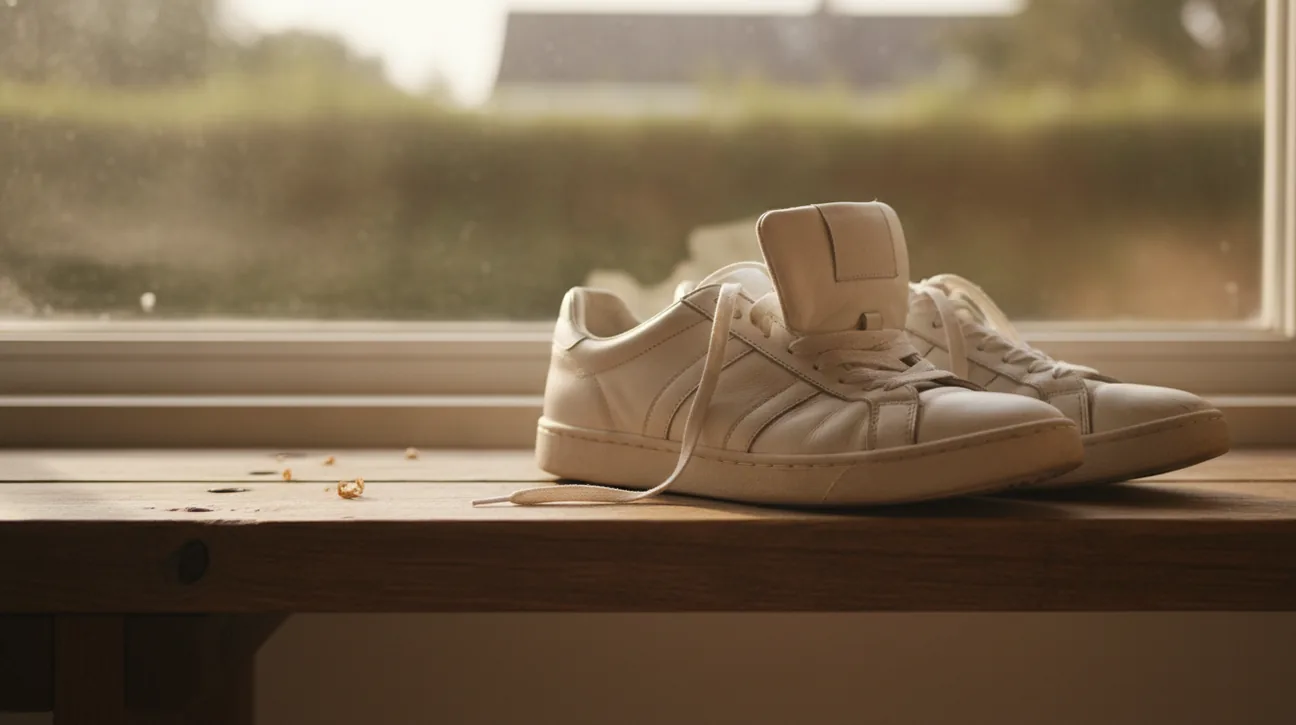
Details to check first when you ask what shoes are these
Color is the weakest clue you have. White sneakers matches thousands of pairs, and searching only by color is how most shoppers land on the wrong model. Work through these features instead, roughly in this order.
- The brand logo and exactly where it sits on the side, heel and tongue
- The silhouette, meaning low-top, mid-top, high-top, boot, sandal or slip-on
- Toe shape and how the panels are laid out
- The lacing system, whether standard eyelets, straps, speed hooks or elastic
- Midsole shape, visible cushioning units, stitching and outsole tread
- Materials such as leather, suede, mesh, knit, rubber, synthetic panels or reflective trim
- Color blocking and any distinctive pattern
Then flip the shoe over and open it up. The tongue label, insole print, heel badge and outsole logo often carry the name or the brand's mark. The tongue label or the size tag inside usually holds a style code, and that code is the closest thing a shoe has to a license plate. If the logo itself is the puzzle, our page on figuring out an unfamiliar logo covers that side.
Shooting a shoe so the model shows up
One blurry shot taken at an angle is the fastest route to a wrong answer. Spend two minutes on this instead.
- Photograph the whole shoe in bright, diffuse light, such as beside a window or in open shade.
- Take separate close images of the outer side, the inner side, the toe, the heel, the outsole, the tongue label, the insole and the size tag.
- Skip filters. Avoid heavy shadows, motion blur and extreme perspective.
- Crop out background objects so the shoe fills the frame.
- Note anything that is not original, such as replacement laces, wear, repairs or custom paint, so you do not mistake it for part of the design.
Lighting matters more than it seems. Yellow bulbs and deep shadows change how a color looks, and color is often what separates two versions of the same model.
Four ways to find the model once you have clear photos
Our scanner. Upload the clearest shot to the scanner above. It describes what it sees, names the likely brand and model, and gives a confidence level. Verify the answer, since it is a lead rather than a verdict.
Google Lens. Google says Lens works from a live camera, a photo you upload or a screenshot, and can return the maker, price, retailers and visually similar products. Google also says you can add text to an image search, such as a color or style description, to refine results. Android and iOS users get it inside Google's app. As a shoe finder it is built around shopping results, so check any price it shows against the date you see it.
Dedicated shoe-ID apps. Two apps of this kind claim databases of more than 100,000 shoes, and one lists support for Nike, Adidas, Converse, Yeezy, Reebok, Vans, ASICS, Balenciaga and Under Armour. A big database does not guarantee a correct match, and claimed accuracy varies from app to app. Read the privacy permissions before you give any app access to your camera roll.
Brand product pages and resale sites. Once you have a candidate, confirm it on the maker's own page, which lists official colorways, style codes and specifications. Resale marketplaces help you compare model names, colorways, release years and sizes. Their listings are not proof of authenticity, and an asking price is not what a pair sold for. For more on that gap, see how to think about what something is worth.
Lookalike pairs and the details that separate them
Plenty of shoes share a silhouette, and a few pairs trip people up again and again. Here are the common ones and the spots to inspect.
| Pair | What to inspect |
|---|---|
| Nike Air Force 1 vs. similar white court shoes | The Swoosh, perforated toe box, heel branding and outsole pattern |
| Nike Dunk vs. Air Jordan 1 | Ankle-collar shape, wing logo, tongue construction and heel-panel design |
| Adidas Samba vs. other gum-sole sneakers | The three stripes, long narrow toe, T-toe overlay and gold side text |
| Converse Chuck Taylor vs. generic canvas high-tops | Circular ankle patch, rubber toe cap, medial license plate and diamond outsole |
| Vans Old Skool vs. similar skate shoes | Side stripe, heel tab, foxing stripe and waffle outsole |
Running shoes versus their lifestyle versions are harder. Running models usually have technical mesh, engineered cushioning, stability structures and a performance outsole shape, but appearance alone may not settle the exact model. When a photo cannot separate two candidates, say so and keep both names on your list.
Describing a shoe in words when the photo is not enough
Any shoe identifier works better with a few words attached to the image. Google says Lens supports image plus text, so add the terms you are sure of. Brand, color, low-top, trail, basketball and gum sole all help. Details from the table above, like a T-toe overlay or a circular ankle patch, make good search words too.
If you cannot name the brand at all, start there. The brand identification page walks through that step, and the same photo habits apply to naming a bag from a photo.
Searching a shoe style code without landing on the wrong pair
Find the code on the tongue label or the size tag inside the shoe. Type it exactly as printed, including letters, hyphens and numbers. Then check it against the manufacturer's product information and against more than one reputable listing. If the box is still around, its label, barcode and country-of-origin text give you a second set of details to cross-check.
Keep a short log as you go. For each candidate, write down the brand, model, colorway, style code, size, release date and a product photo. Then compare fixed details such as logo placement, panel seams, outsole tread, tongue label, heel shape and midsole geometry. Fixed details are more reliable than color, because one model comes in many colorways.
How a shoe guess lands on the wrong pair
- Searching only by color
- Skipping the tongue label, style code, box label and outsole
- Treating a visually similar result as the exact model
- Confusing a colorway with a model. The model is the design, and a colorway is one color scheme on it.
- Trusting a seller's title without comparing construction details
- Assuming a big database means a right answer
- Treating resale asking prices as completed-sale values
- Mistaking customized, repaired or counterfeit parts for original features
- Identifying from one blurry image
One more habit helps. Do not report a model, size, date or price when your evidence only supports a broader category, like white leather low-top sneaker.
What size, price and authenticity a photo leaves unanswered
A photo shows no size. Check the tag inside the shoe, or measure your foot length against the brand's current size chart. Nike publishes size charts by category and on product pages, and its men's footwear charts list US sizes from 3.5 through 22 in half-size steps.
Authenticity is harder. Logos, stitching, typography, materials, style code, box label and construction all have to agree, and a photo alone cannot prove a pair is real. If a pair might be rare or valuable, get an authentication assessment before you buy, sell or claim it is genuine. Original retail price, resale price and current availability also depend on the confirmed model, size, condition, region and date, so none of them can be read off a picture.
When you report your result, use likely or confirmed. Visual similarity earns likely and nothing more. The style code is what moves a guess to confirmed, so whenever you ask what shoes are these, finish by matching it.
Cleaning up a shoe photo for privacy before uploading it
Shoe photos pick up more than shoes. A background can reveal your location, school, workplace or who owns the pair. Before uploading, crop out faces, home addresses, license plates, documents, QR codes and personal labels. Do not upload another person's identifiable image without permission, and read an app's privacy policy and permissions before you grant camera-roll or cloud access.
Product photos can also be copyrighted by the photographer or publisher, so reuse them only as the license or service terms allow. Never use a product photo to pass a pair off as authentic or to impersonate its owner. Anything else you cannot name goes through the homepage tool, which works the same way.
Questions about what shoes are these
How can I find a shoe from a picture?
Use bright light for the whole shoe, then add close shots of the tongue label, insole, outsole and size tag. Try the clearest image in Google Lens or another image identifier, add words such as brand or color, then check the style code against the maker's product pages and several listings. Call the result likely until the code matches.
Can Google Lens identify shoes?
Google describes Lens as searching from the camera, a saved image or a screenshot, with results that can include maker, price, stores and lookalike products. You can add text such as a color or style to refine results. It works through the Google app on Android and iOS. Similar results are not always the exact model, so confirm with the style code.
Where is the style code on a shoe?
It is usually on the tongue label or on the size tag inside the shoe. Search it exactly as printed, with letters, hyphens and numbers intact. Then verify it against the manufacturer's product information and more than one reputable listing. A box label can give you a second set of details to compare, along with a barcode and country-of-origin text.
Can you tell if a shoe is fake from a photo?
Not with certainty. Logos, stitching, typography, materials, style code, box label and construction all have to agree, and a single photo rarely shows enough of them. A photo can raise red flags, but for a rare or valuable pair, get an authentication assessment from an experienced authenticator before you buy or sell.
Are shoe identification apps accurate?
Accuracy varies by app, and the figures are the apps' own claims. Two apps say their databases hold more than 100,000 shoes, but database size does not guarantee a correct match. Treat an app's answer as a candidate, compare fixed details like logo placement, outsole tread and heel shape, and verify the style code before you trust it.
What if my shoes are worn or customized?
Wear, replacement laces, repairs and custom work change how a shoe looks, and they can fool a visual search. Photograph the parts that tend to stay original, such as the tongue label, size tag, midsole shape and outsole tread, and note what you changed. Sort original features from alterations before you compare against product photos.
How much are my sneakers worth from a photo?
No. Original retail price, resale price and availability depend on the confirmed model, size, condition, region and date. Resale listings show asking prices, which are not completed-sale values, and they are not proof of authenticity. Identify the model first, then compare similar pairs in the same condition and size, and note the date of every price.
How does a shoe model differ from a colorway?
The model is the design of the shoe, while a colorway is just one color scheme on that design. One model comes in many colorways, so color is the weakest clue. Fixed details such as logo placement, panel seams, outsole tread, tongue label, heel shape and midsole geometry are more reliable, and the style code confirms the match.