
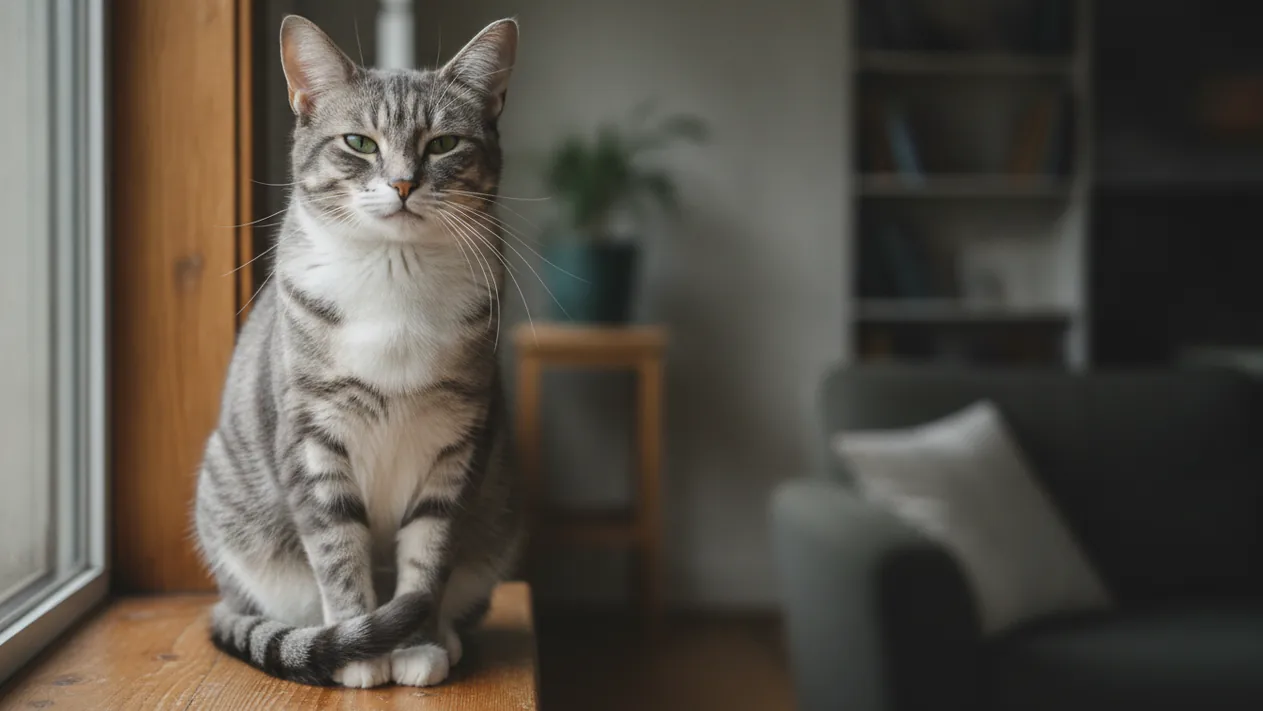
What a cat photo can and cannot tell you
A photo shows the outside of a cat. That is enough to read coat length, color, pattern, head shape and body type, and to name a likely breed group. It is not enough to name a registered breed. Pedigree documentation is the only definitive evidence that a cat is a registered purebred, according to the WhatIsMyCatBreed DNA guide.
Any cat breed identifier works from those same outside clues, whether it is an app, a website or a friend who knows cats. So the honest answer to "what type of cat is this" is usually a description plus a short list of candidates. "Gray shorthair, round face, copper eyes, could be a British Shorthair type" is a good result. An app that publishes how it was tested and how often it is wrong earns extra trust. One that just announces a breed with total confidence does not.
The ten features that matter when you identify a cat
Note these from several clear photos, not one. The Pet Times says no single feature reliably establishes breed, so treat this as a checklist and not a quiz.
- Coat length. Hairless, short, medium, long or semi-long.
- Coat texture. Straight, curly, wiry, dense, silky or woolly.
- Color and pattern. Solid, bicolor, tuxedo, tabby, tortoiseshell, calico, color-point, smoke, shaded or ticked.
- Head shape. Wedge-shaped, rounded, broad or boxy.
- Ears. Size, set, tips, furnishings, and whether they fold backward or forward.
- Eyes. Color, shape, spacing and whether they are crossed.
- Body type. Slender, muscular, cobby, long-bodied or large-framed.
- Legs and paws. Leg length, paw size, toe count and tufts.
- Tail. Length, thickness, plume, curl or absence.
- Distinctive traits. Folded ears, a curled coat, a short tail, extra toes (called polydactyly) or color points.
Photographing a cat so the details show
Good evidence beats a clever guess. Work through these steps, and skip any the cat will not allow.
- Take front, side and full-body photos, plus close-ups of the tail, paws and ears.
- Shoot in natural light, with a familiar object such as a coin in the frame for size.
- Write down what you see in plain words. Write "blue eyes" rather than "Siamese."
- Retake any shot that is dim, blurry or taken from an odd angle.
Lighting, camera angle, grooming, age, illness and seasonal coat changes all change how a cat looks. A single dim photo of a fluffed-up winter coat can send you to the wrong breed. With a good shot in hand, add it to the upload button up top for a description and how sure the model is, then check that answer against the standards below.
Cat lookalikes that get mixed up
Most wrong breed labels come from a handful of lookalike pairs. This table shows what each group shares and what to compare instead.
| Lookalikes | What they share | What to compare |
|---|---|---|
| Siamese, Ragdoll, Birman, Himalayan | Blue eyes and dark points on the face, ears, legs and tail | Body size, coat length, facial shape, paw markings |
| Maine Coon and Norwegian Forest Cat | Large, long-haired bodies with ear furnishings | Muzzle and head shape, coat texture, tail, body profile |
| Domestic longhair and Maine Coon | A long coat and ear tufts | Pedigree or genetic evidence, since tufts alone prove nothing |
| Domestic shorthair and named short-haired breeds | Common short coats that resemble American Shorthair, British Shorthair or Russian Blue | Body and head structure, because coat color alone is not enough |
| Tabby and Bengal | Spots or rosettes | More than spotting, since ordinary domestic cats can have spotted coats too |
| Folded-ear cats and Scottish Fold | Ears that fold forward | Nothing in a photo confirms breed or genetic status |
Calico versus tortoiseshell: spotting the difference
Look for white. A calico has substantial white areas along with its patches. A tortoiseshell is mostly mixed black or brown and orange, without large white areas. People swap the two names constantly, and it is one of the easiest mistakes to fix.
How to narrow down breed candidates with CFA and TICA standards
The Cat Fanciers' Association (CFA) publishes breed standards, accepted colors and breed descriptions. The International Cat Association (TICA) publishes standards and permitted physical characteristics. Breed clubs add galleries that show how to separate similar breeds. All three are worth a look before you commit to a label.
- Search the standards for breeds that share your cat's coat and body traits.
- Pick at least three candidates.
- For each one, list the features that support it and the features that contradict it.
- If the evidence is thin, label the cat conservatively as a domestic shorthair, a domestic longhair or a likely breed type.
Reverse-image and visual-search tools can find pictures that look similar. They cannot verify pedigree, so a match is a lead and not an identification. If you are not sure the animal is a house cat, start at the any-animal page. A tree in the photo gets its own answer on the tree page, and a pet in a tank belongs to the fish page. Dog owners hit the same wall, and our guide to finding a dog's breed from a picture follows the same logic.
When a cat DNA test is worth paying for
A DNA test is the only route to real ancestry information, but it does not turn a cat into a registered breed. Results generally show genetic similarity or ancestry categories. Hepper and Animalso both make this point.
Prices vary. Cat DNA tests commonly cost about $100 to $150 in 2026, and published ranges run from roughly $45 to $200 or more depending on the panel, according to Hepper, WhatIsMyCatBreed and Top Consumer Reviews. Two examples show how different the panels are.
- Wisdom Panel Complete for Cats is listed at $129.99 and screens for more than 70 breeds and populations. Wisdom Panel reports a turnaround of about 3 to 4 weeks after the laboratory receives the sample.
- Basepaws Breed + Health is reported to cover 21 breed types plus four breed regions, 64 health markers associated with 43 diseases and 50 trait markers. Animalso reports a turnaround of 4 to 6 weeks.
Percentages from one company are not directly comparable with another company's, so pick one lab and stick with it. A DNA result is also not a veterinary diagnosis. Health findings need a vet to interpret them. Before you mail a sample, read the company's terms on sample storage, genetic-data sharing, deletion and research use. Policies differ by provider, so check the current policy page.
Buy a test only if the ancestry answer is worth the cost to you. If you just want a name for a pretty tabby, the standards and a good set of photos get you most of the way for free, and the same approach carries over to an odd mushroom in the garden.
Records and people who can narrow down a cat's background
Paperwork often beats pixels. Shelters and rescue organizations may have intake records, microchip information, owner reports or a documented breed estimate. A breeder or adoption contract may carry registration details. A veterinarian can assess anatomy, health, age range, sex and features linked to breed groups. A vet's opinion does not establish registration, but it is useful for odd anatomy or health questions that no online label can answer.
If the photo includes something you cannot name, such as a tag, a gadget or an unusual toy, the page for naming unknown objects can help. Things that are not cats can go to the what is this homepage.
Typical reasons a cat gets the wrong breed label
- Treating coat color as proof of breed.
- Identifying a cat from one facial feature.
- Confusing a breed type with a registered breed.
- Calling every large long-haired cat a Maine Coon.
- Treating a visual-search match as scientific identification.
- Assuming DNA percentages mean the same thing across companies.
- Reporting a guess as certain.
- Using a breed label to predict temperament, health or behavior without evidence.
That last one matters more than it sounds. Breed labels can affect adoption, insurance, housing and sale claims. Do not advertise a cat as purebred without documents to back it up.
Staying safe and respectful when you photograph a cat
Do not restrain a frightened or unfamiliar cat just to get a better shot. Do not feed, touch or approach an unknown cat without thinking about bite and scratch risk, and if you do get marked, our guide to identifying bites by picture can help you work out what caused it. A zoom lens or a few patient minutes works better than a grab.
If you plan to post a photo online, leave out anything that identifies a person or place. That includes the owner, the home, an address, a collar tag and microchip information. Get consent before you publish any of it.
Questions about what type of cat is this
How do I see what type of cat I have?
Start with photos from the front, side and full body, plus close-ups of the ears, paws and tail. Record coat length, texture, color, pattern, head shape and body type. Compare those traits with CFA and TICA breed standards, list at least three candidates, and label the cat conservatively as a domestic shorthair or longhair unless you have pedigree papers.
Can a photo tell me my cat's exact breed?
No. A photo shows coat, color, pattern and body type, which point to a likely breed group. Pedigree documentation is the only definitive evidence of a registered purebred. Even a DNA test reports genetic similarity or ancestry categories rather than proving a specific registered breed. Treat photo results as a well-supported guess, not a certificate.
How much does a cat DNA test cost?
Most cat DNA tests cost about $100 to $150 in 2026. Wider published ranges run from roughly $45 to $200 or more, depending on the panel. Wisdom Panel Complete for Cats is listed at $129.99 and screens for more than 70 breeds and populations. Results can take about 3 to 6 weeks, depending on the lab.
How does a calico differ from a tortoiseshell cat?
White is the giveaway. A calico has substantial white areas mixed with its colored patches. A tortoiseshell is primarily mixed black or brown and orange, without large white areas. Both names describe a coat pattern, not a breed, so cats of many breeds and plain domestic cats can be either one.
Do long fur and ear tufts mean my cat is a Maine Coon?
Not by itself. A long coat and ear tufts do not prove Maine Coon ancestry, and Norwegian Forest Cats can also be large and long-haired with ear furnishings. Compare muzzle and head shape, coat texture, tail and body profile. Only pedigree or genetic evidence can support a Maine Coon label.
Do blue eyes and dark points mean a cat is Siamese?
No. Siamese, Ragdoll, Birman and Himalayan cats can all have blue eyes and dark points on the face, ears, legs and tail. To separate them, compare body size, coat length, facial shape and paw markings. Describe what you see, such as "blue eyes and dark points," instead of naming a breed.
What should I call a cat when I cannot confirm its breed?
Use a conservative label. Call it a domestic shorthair or domestic longhair, or say "likely [breed] type" if the features fit a breed well. Without pedigree evidence, avoid calling a cat purebred. Shelter, adoption, microchip or breeder records may give a documented breed estimate if you want something more specific.
Can a vet tell me what breed my cat is?
A vet can assess anatomy, health, age range, sex and features associated with breed groups. That makes a vet useful for odd body features or health questions. A veterinary opinion does not establish registration, so it cannot confirm a purebred cat the way pedigree papers can.